
Designed for Everyone (As Long As No One Looks Disabled)
Accessibility, Infomercials, and the Fear of Need

Shrink wrap is a nefarious invention, and I’m tired of pretending otherwise.
Or, at least— I’m locked in a fistfight with a potato, and somehow I’m losing.
It’s December, a month that blankets the air with a damp chill. In North Carolina, a persistent drizzle is soaking through the day, and the barometric pressure impacts more than just the weather. Today, inflammatory arthritis means that my thumb joint feels like it is being held over a lighter, every small movement demanding a negotiation between necessity and pain.
At first glance, the package I’m struggling with looks deceptively harmless. It’s the type of shrink wrap with the little jagged seam that seems to sneer back at me, defiant. The kind that takes a firm pinch to open. (Or the grace of God. Probably both.)
I tear at the plastic—first with my nails, then with scissors, then with my teeth, in a move that feels both undignified and familiar. My hands are already angry today. The packaging escalates the fight. And yet…
Nothing.
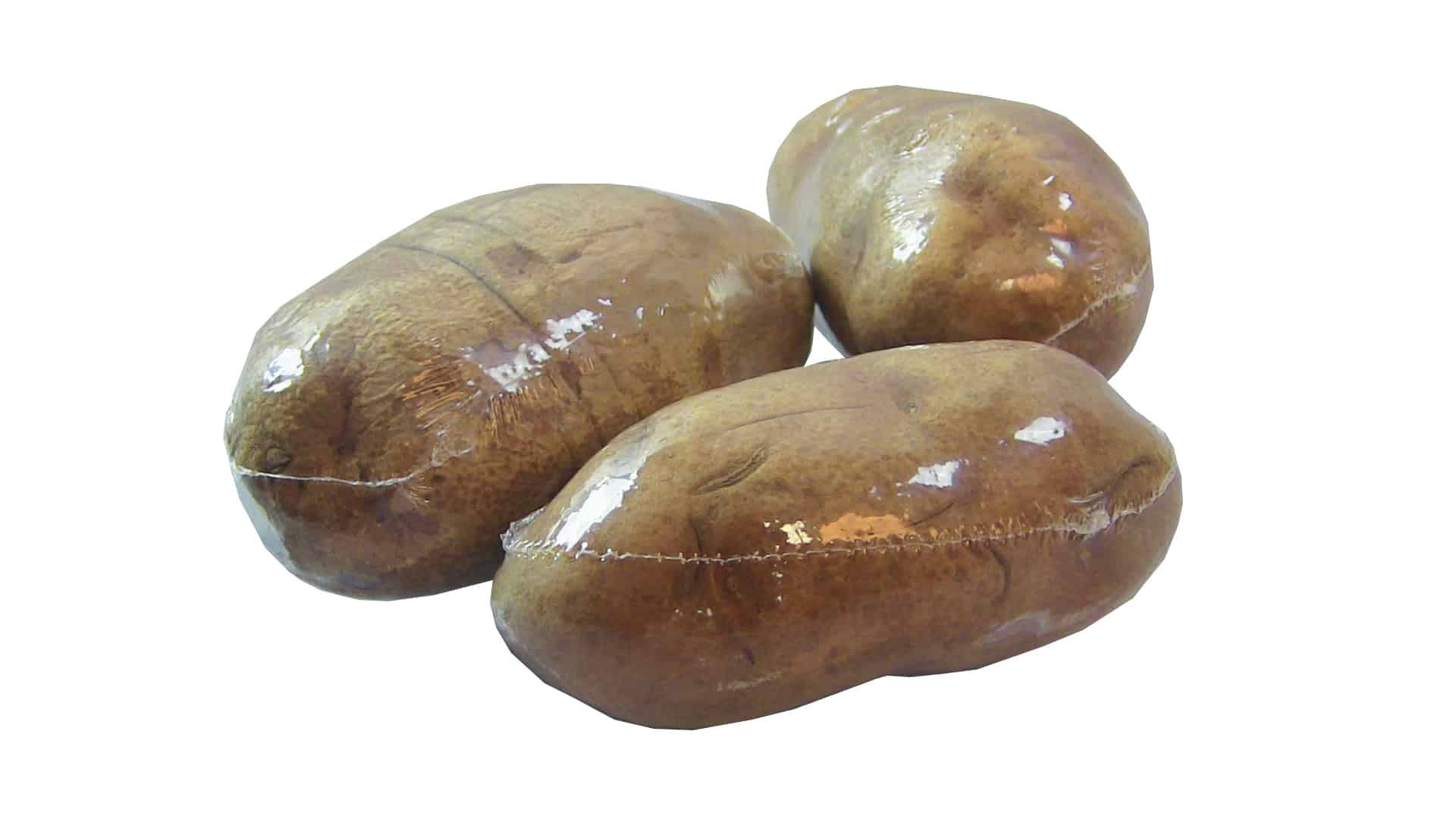
I stand there, clutching an overpriced $4 root vegetable, tears pricking my eyes, overwhelmed by a growing, jagged rage. I feel pathetic. I feel hungry. I feel trapped in a body that has negotiated the terms of my dinner and voted “no.”
This is the part in the infomercial where they say, “There has to be a better way!”
My reality sounds more like a pent-up: “You’ve GOT to be fucking kidding me.”
I: The Siren Song of Shame
What gets me, looking back, isn’t that I needed help. It’s how quickly my body knows to treat any “extra” need as embarrassing—something to solve quietly, efficiently, without witnesses.
I’ve learned to turn “I’m struggling” into shame. It’s the siren song of internalized ableism.
And when a culture treats need as embarrassing, it also treats access tools as suspicious. That shame doesn’t live only in my head; it’s engineered into the stories we’re sold.
You know those chaotic infomercials where a seemingly able-bodied adult… suddenly forgets how to exist?
The camera shows them attempting a basic task (say, peeling a clove of garlic) only for them to somehow knock every dish out of their cabinets in an absurd turn of events. You can watch a few examples here:
Then, a tool appears onscreen, sleek and reassuring.
The actress’s hands, once clenched with tension, now relax, and her shoulders ease away from her ears. Relief is visible in her posture as much as on her face. Crisis resolved! Dinner saved. The music swells as she laughs at herself, restored to competence, her brief brush with incapacity neatly contained and erased.
It’s so ridiculous you might laugh. In fact, it’s encouraged. If you take these products seriously, you risk being the butt of the joke.
Take the Huffington Post, where one writer pointedly linked such devices to low intelligence, offering advice such as “Learn to use a knife already, or just get out of the kitchen.”
This is the kind of ableism that gets to wear a little comedy hat: it assumes the reader’s body is the default setting, and anyone who needs a workaround is either lazy or ridiculous. And it stays defensible, because if you object, someone can always shrug and say, I didn’t mean disabled people.
But the gag only works if you pretend disability doesn’t exist. It’s easy to laugh until you’re the one struggling to use a can opener. Then “learn to use a knife” stops sounding like tough love and starts sounding like a nasty morality test pretending to be common sense.
II. Selling Ability While Erasing Disability
That defense (“I didn’t mean you”) is usually offered in place of an apology. But from a critical disability studies lens, it’s not only a poor defense. It’s a description of the problem.
Robert McRuer calls the force behind that default-setting logic “compulsory able-bodiedness.” He argues that “able-bodiedness, even more than heterosexuality, still largely masquerades as a nonidentity, as the natural order of things.” (Crip Theory, 2006)
Which raises an awkward question the infomercial can’t afford to ask out loud: what if the ad showed someone who actually needs the tool?
What if the actor had a limb difference? What if we saw fingers that cannot grasp a clove of garlic? What if the infomercial showed not someone who seems to be suddenly swept up by an invisible wind of chaos, but someone who faces a predictable, daily negotiation with their material reality?
Marketing logic says the product would die on the shelf.
A few years ago, while preparing a TEDx talk on shame-based marketing, I spent months inside the psychology of influence. I went down a rabbit hole of how ads manufacture shame—and then monetize the urge to erase it.
What became clear was that the marketing strategy relies on more than just “sex sells” or “shame sells”—it hinges on promising a straightforward transformation: a journey from inadequacy to absolution, with the product as the key to redemption. You need the product or service to wash away your “sins” of being too smelly or too ugly or too slow or too stupid. Or at least that’s the claim.
It is a contract that every lifestyle product signs with the consumer: You are inadequate now, but this purchase will restore you to wholeness.
That means that both shame and humor advertising hinge on a fast redemption arc. You watch the actors feel briefly “off-kilter,” they buy the fix, and they return to normal.
But unlike a wine stain, disability often cannot be scrubbed away by a $19.99 gadget.
The jar opener doesn’t cure my arthritis; it just opens the jar. My hand remains painful. The “Before” picture persists even after the credit card is swiped.
The woman in the infomercial can’t open the jar because she’s a “busy mom” or “distracted.” I can’t open this damn potato because my immune system is eating my joints.
That “fully-functioning adult who forgets how to exist” character is doing symbolic labor:
They are allowed to struggle temporarily.
Their incompetence is funny, reversible, and non-threatening.
They don’t destabilize the fantasy of the able body/mind as default.
III: The Brand-Safe Body
Why is the audience fine with an able-seeming person shaking a salad spinner like it owes them money, but uneasy watching a tremoring hand use a grip tool that’s designed to help?
Because our culture operates with a double standard for assistance—and that standard is organized around output.
We applaud nondisabled people for using technology to “supercharge” their lives or to make it look more effortless, yet shame disabled people for needing technology to live their lives.
When a tech bro uses voice-to-text to draft an email while driving, he’s perceived as hyper-producing: multitasking, maximizing output, turning the day into a machine. In the hands of a disabled person, that same tool is read as friction—impeding the workflow, creating a lag, proof that you can’t keep up.
In places like workplaces, schools, and healthcare, disabled need gets audited, documented, and rationed. Someone seeking dictation software as an accommodation will likely be asked to prove it, quantify it, and stay palatable while making the request.
To the capitalist gaze, the disabled user isn’t “hacking” the system to produce more; they are burdening the system just to participate.
Marketing decks talk about “relatability,” but what they’re really managing is this specific anxiety. They want the tool to signal speed, not need. They want the Brand-Safe Body—one that uses technology to conquer the world, not one that requires technology to inhabit it.
Because if access stops feeling like an upgrade and starts reading as infrastructure, the whole fantasy cracks. That’s the terrifying part for a hyper-individualist culture.
Infrastructure implies obligation.
Infrastructure implies cost.
Infrastructure implies that independence was never a solo achievement.
So the ads keep the tool and erase the need. They cast a brand-safe body: someone allowed to struggle briefly, in a funny way, with a quick redemption arc. Disability ruins that arc. It makes the challenge legible as structural instead of silly. It drags the scene out of comedy and into proximity with the thing we’re trained to avoid: dependence, vulnerability, the fact that the body is not a closed system.
In the glossy lexicon of advertising, disability stays coded as niche, depressing, liability-adjacent, not aspirational. So the products get sold as clever conveniences for everyone—because “for disabled people” is still treated like a warning label instead of a basic description of reality.
And when access has to be smuggled in under the name “convenience,” it’s worth asking who that disguise is actually protecting.
IV. The Potato and the Politics of Need
Is it possible to have the tool without the theater? Of course.
There’s an often quoted story in design circles about OXO Good Grips. Sam Farber watched his wife, Betsey, struggle to hold a standard peeler because of arthritis, and he designed a handle that was soft, thick, non-slip, easier to grip without pain.
It became a massive hit—not only for arthritic users, but for professional chefs and able-bodied home cooks. The design was better!
That’s the version of “access going mainstream” that I can get behind: better design spreading outward, without treating disabled people like a PR hazard.
But we need to draw a sharp, jagged line between accessibility going mainstream and accessibility going mainstream only if disability is censored out.
I’m wary of any story that claims Capitalism actually helped the underdog for once.
Back in my kitchen, the potato doesn’t care about any of this. The shrink wrap doesn’t care either. It just demands a pinch that my hands can’t reliably produce today. The tool that finally frees it sits in my drawer, unremarkable and efficient.
Using the tool doesn’t redeem me, because I didn’t need redemption. I just needed dinner.
That Huffington Post author can fuck off.
Thankful yet hangry,
—Alyssa 🌿☀️
P.S. — Got a tool that’s saved you from losing your shit in the kitchen? Or a favorite page for disability cooking ideas? Drop the deets in the comments to share the love.
P.P.S. — This newsletter is entirely reader-supported. If you want to support my work (and my grocery bill), consider becoming a paid subscriber. It allows me to keep tracing the lines between culture, power, and potatoes.
“I didn’t need redemption. I just needed dinner.” !
That line alone dismantles so much quiet shame around need.
The way you trace how access gets smuggled in as ‘convenience’ rather than named honestly is sharp and deeply felt.
Wow, this was a wonderful and important read. I don’t post here I just read but I need to restack this and share it with people because holy hell you’re so right!