
A Prescription for Heteronormativity
Medical coercion, compulsory sexuality, and a whole bunch of other bullshit

The first time someone threatened to forcibly alter my sexuality, they called it healthcare.
Some girls get told to wait for the “right man.” I got told my body might need pharmaceutical assistance.
My body has never really felt like mine in clinical settings, but still, I expected doctors to poke at my limbs, not my desires (or lack thereof).
I sat, a statue in a paper gown, as the doctor looked me over with the practiced, placid empathy of a mechanic evaluating a stalled engine.
You see, I had said the most dangerous thing you can say as a girl. “No.”
I: A Prescription for Heteronormativity
I was a teenager when my family’s anxiety over my “differentness” finally spilled over into an exam room. I’d said I never wanted to have sex with a man. My parents relayed it to the doctor as if apologetically reporting a symptom.
I remember feeling… far away. I’d gotten good at that by then. Going soft and distant while adults talked over me, past me, around me.
Then the doctor, in his white-coated benevolence, suggested a low dose of testosterone to “boost my libido.”
My shoulders hunched, caught off guard by this strange mix of feeling invisible but also completely on display.
This was supposed to be care. So why did I feel cornered?
Instead of hearing a self-realization from a teenager, the adults in the room heard “hormone deficiency.”
There was a word for girls like me, apparently. Treatable.
This gentling of words is how power pretends to soften its hands before reaching for you.
Sitting on that crinkling exam paper, I knew my actual desires were functionally irrelevant to the people managing my care.
My “no” stayed inside me like a locked muscle, alive and disbelieved.
I am haunted by the feeling of being force-fed things that turn my stomach. The bile rising in my throat tastes like girlhood.
II: What Would You Do for a “Yes”?
Even then, I understood something in my bones… they were calling coercion care.
A doctor looked at a child saying no and went looking for the dosage that might turn it into yes.
What kind of culture hears a child’s disinterest in sex and immediately suggests a prescription to “correct” it? There is a terrifying arrogance in it.
And it’s not just the suggestion of taking hormones to “fix” my lack of desire. It’s the culture that produced the suggestion. My experience was one small act in a much larger project that treats women’s and girls’ desire as something to be optimized for heterosexual consumption.
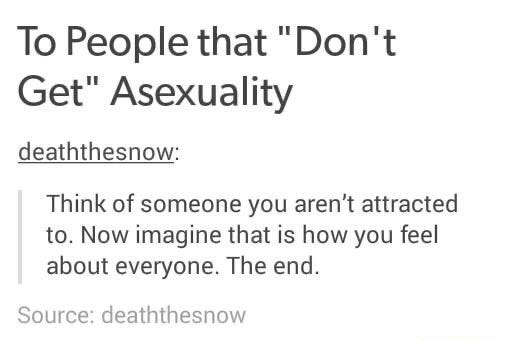
Years later, finding the asexual spectrum community taught me a different vocabulary to describe what happened.
In her book Asexual Erotics, scholar Ela Przybylo calls this system compulsory sexuality—the societal pressure that treats sexual desire as evidence of wellness, maturity, and even personhood.
It’s the idea that to be a REAL adult (healthy, whole, loved) you must want sex.
And if you don’t? You’re often framed as sick, sad, immature, frigid or in need of fixing.
That pressure to conform to “normative” sexual behavior can manifest as medical pathologization, conversion therapy, and even “corrective” rape.
“The logic goes that if people must have sex, they cannot reasonably refuse it.” —Rosel Jackson Stern
The term “compulsory sexuality” builds on Adrienne Rich’s concept of “compulsory heterosexuality.” Naturally, the two are even more dangerous when they work together.
You may have noticed the particular panic reserved for girls who do not appear to be arranging themselves and their futures around male desire.
Not wanting men is still, in many contexts, treated less like a self-description and more like a developmental delay.
Compulsory sexuality functions like a social architect, trying to usher us all into the same horny, cramped, heterosexual room.
III: Woman as Asset First, Person Second
As I turn this memory between my fingers like a crystal, different facets catch the light.
I think of my transgender sisters, brothers, and siblings who have been targeted for seeking access to gender-affirming hormone therapy.
I picture my mom meeting with another gynecologist after being denied hormone therapy for menopause.
There are various reasons someone might seek hormone replacement therapy. So why is it pushed for some folks and stigmatized for others?
When my libido was nonexistent, testosterone was floated as a minor chemical tweak. When a trans teen wants hormones, the rhetoric often shifts to “lifelong damage.”
Alliance Defending Freedom’s Matt Sharp claimed that “experimental gender‑transition procedures foisted on our children are often irreversible.”
Now that you’ve read my story, perhaps you'll join me in thinking “wow. that’s pretty fucking rich, Matt.”
No, seriously. Where was the conservative panic about “protecting children” when doctors try to brute-force stimulate minors’ sex drive?
Jason Klein, a pediatric endocrinologist, said for an interview with VICE, “Puberty blockers have been used for decades in cisgender kids who… are going through puberty too early.”
The question is never just “Are hormones safe?” It’s “Safe for which people, and in service of what kind of future?”
As The Southern Poverty Law Center put it, “Keeping these “desirable” women reproducing is a central tenet of their ideology.”
Under this logic, the unacceptable medical intervention is the one that allows people to step outside straight, fertile, binary futures.
That’s why the “dangerous” rhetoric is applied when hormones might disrupt cisheteronormativity.
Who gets framed as “depraved” for altering their body, and who gets framed as “broken” if they don’t?
IV: Lack of Desire is Not Brokenness
When a child says no to the script they’ve been handed, a healthy society gets curious. A sick society writes a prescription.
How differently might that appointment have gone if my doctor had just said, “Tell me more”?
If Pride means anything to me this June, it’s the absolute refusal to let my inner life be sanitized. I am not a broken mechanism waiting for the right hormone cocktail to make me want what they want.
Pride matters because queer people are still taught, in subtle and clinical ways, that the “wrong” kind of desire (including no desire) must be corrected.
Pride includes the right to say yes, no, not yet, not like that, not with him (/her/them), maybe never, and still be treated as whole.
There was never anything immature about my disinterest. The immaturity was a culture that could only imagine difference as disorder.
Some forms of queerness get doubted not because they are incoherent, but because they threaten the stories institutions prefer to tell about desire.
It all reminds me of a pop culture proverb (often misattributed to Oscar Wilde):
“Everything in the world is about sex except sex. Sex is about power.”
Utterly befuddled & (apparently) under-aroused,
-Alyssa ☀️
P.S. If you want to keep untangling this stuff together, you can subscribe, share, or just quietly lurk. Either way, I’m glad you’re here.
Suggested Reading:

I'm so sorry for what you went through. And thank you for writing about it so openly. I understand all too well the shame around not feeling attraction and not wanting sex. I wish the language I have now had been available to me when I was younger - I felt so alone in my lack of desire; but finding the asexual spectrum community in recent years has been such a welcome releif.
Thank you again for writing and sharing this; I'm incredibly grateful 💜
Thank you sharing this 🙏 spot on.
“…the idea that to be a REAL adult (healthy, whole, loved) you must want sex.” — I relate to this and also I’ve experienced this same pattern being disabled and not being able to work much. The same idea that if you don’t have a job then you’re not a REAL adult… 🙄🥴